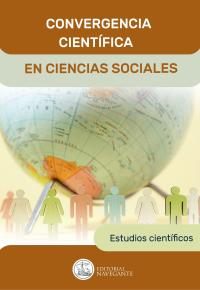
Scientific convergence in social sciences: Scientific studies
Keywords:
research, science, social sciencesSynopsis
The social sciences, by their very nature, are in constant internal dialogue; they share a common goal: to understand human dynamics in their multiple dimensions. However, for decades, these areas of knowledge have developed their own theoretical frameworks, methodologies, and languages, which has sometimes limited their ability to comprehensively address the complex phenomena that shape our societies.
In the 21st century, marked by globalization, environmental crises, persistent inequality, digital transformation, and accelerated cultural changes, a social science capable of thinking at the intersection is essential. This book responds to this need by compiling research that represents a genuine effort at scientific convergence among different social disciplines.
Each chapter offers a transversal perspective, combining approaches and tools from diverse areas to explore phenomena such as migration, governance, social conflict, identity, exclusion, development, law, and urban transformation. These works not only describe social realities but also interpret them from an integrative perspective, recognizing that no phenomenon can be fully understood from a single disciplinary perspective.
The objective of this work is twofold: on the one hand, to highlight research that enriches the field of social sciences through the intersection of knowledge; on the other, to inspire new forms of academic collaboration that transcend disciplinary boundaries without losing the rigor and specificity of analysis.
This compilation is aimed at researchers, teachers, students, and professionals interested in a deep and contextualized understanding of social reality. We offer a tour of works that demonstrate that, when disciplines interact, social science is empowered and becomes more relevant for interpreting and transforming our world.
Chapters
-
Corporate Transformation in Peru: Governance, Sustainability, and New Regulatory Trends
-
Legal innovation for microenterprises: Comprehensive legal assistance models in the entrepreneurial ecosystem
-
Protective measures for victims of gender-based violence in Latin America
-
Gender violence at the institutional level in the legal system
-
Competence to initiate the sanctioning procedure by the INDECOPI's decision-making bodies in cases of account closure and refusal to open an account
-
Legal certainty and its application in the administrative sanctioning procedure, based on the concept and content of the Administrative Principle of Predictability or Legitimate Trust, Typicality and Presumption of Validity
-
Cultural identity and the conative attitude of university students
-
Cultural identity and self-esteem in the performance of university engineering students
-
STEM Education in Early Childhood: Conceptual Development, Pedagogical Approaches, and Current Challenges
-
Intercultural competencies in pre-school teacher training programs
-
Influence of the maternal role on the academic performance of university students
-
The economic dependence of university students and their academic performance
-
The influence of administrative practices on the efficiency of customs companies in Callao: A focus on Chinese imports
-
Analysis of logistics and operational management in customs companies in Callao: The case of imports from China
-
Historical analysis of milk production based on business intelligence
-
Advances in artificial intelligence in agribusiness
-
The influence of demographic and organizational characteristics on the practice of public accounting
-
Auditor accountability and ethics in audit quality in public accounting firms
-
Comparative analysis of administrative practices in microenterprises in Metropolitan Lima and border cities of Ecuador: Challenges and opportunities in the post-pandemic context
-
Strategic management in public organizations in Metropolitan Lima versus experiences in Bolivia and Chile: Lessons learned and future prospects
-
Impact of digital technologies on social inclusion in Metropolitan Lima: A comparative analysis with technological initiatives in cities in Colombia and Brazil
-
Development of digital platforms to improve social services in Lima: A comparative study of successful experiences
-
Fiscal transparency and public auditing in Metropolitan Lima: Comparative evaluation with models implemented in cities in Chile and Argentina
-
The role of government accounting in reducing corruption: Case studies in Metropolitan Lima, Guayaquil, and La Paz
-
Innovative pedagogical strategies for teaching mathematics in schools in Metropolitan Lima: Comparison with educational experiences in cities in Ecuador and Bolivia
-
Challenges and advances in teaching mathematics in urban contexts: Comparative analysis between Metropolitan Lima and São Paulo
-
Radiation balance on different soil surfaces: a review of components, methodologies and ecohydrological implications
-
Testing methods of heat transfer to the soil: a review of experimental techniques and emerging applications
Downloads
Download data is not yet available.
Published
May 28, 2025
Categories
Copyright (c) 2025 Submission Editorial Navegante
License

This work is licensed under a Creative Commons Attribution-NonCommercial-NoDerivatives 3.0 Unported License.


 contacto@editorialnavegante.com