

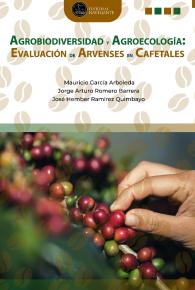
Agrobiodiversity and agroecology: Weed assessment in coffee plantations
Keywords:
agrobiodiversity, agroecology, weeds in coffee plantationsSynopsis
Despite the growing body of research on the components of agroecosystems, there is a notable gap in the synthesis of knowledge regarding the ecological management of weeds and their quantification as a resource in coffee plantations. This book seeks to fill this gap by providing an updated perspective that integrates the findings of specific experimental research in the coffee-growing region of Tolima, Colombia. Throughout its chapters, the concept and relevance of agrobiodiversity, the ecological and agronomic role of weeds, strategies for their sustainable management, methods for quantifying their biomass, and the analysis of their chemical and nutritional composition are explored. Subsequently, tools for assessing plant diversity are examined, and the impact of this diversity on the productivity, sustainability, and resilience of coffee plantations is analyzed, culminating with a critical analysis and presentation of the contributions of the aforementioned case study. The overall objective of this work is, therefore, to comprehensively assess the role of weeds as components of agrobiodiversity in coffee production systems, analyzing their contribution to biomass, nutrient dynamics, and agroecosystem sustainability, with the goal of promoting more ecological and productive management approaches.
Downloads
Download data is not yet available.
Downloads
Published
August 5, 2025
Categories
Copyright (c) 2025 Submission Editorial Navegante
License

This work is licensed under a Creative Commons Attribution-NonCommercial-NoDerivatives 4.0 International License.


 contacto@editorialnavegante.com