

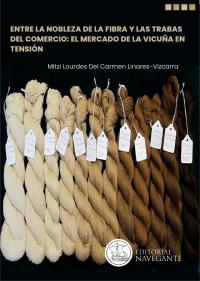
Between the nobility of the fiber and the obstacles of trade: The vicuña market under tension
Keywords:
trade, vicuñaSynopsis
This study thoroughly analyzes the national and international regulatory framework, encompassing both the customs legislation applicable in Peru (NANDINA) and the Free Trade Agreements it maintains with the United States and the European Union. Its empirical contribution is based on a diagnosis of the current export context, using publicly available statistical data from SUNAT (Peru's tax authority) and other international organizations with significant market participation to quantify production volumes and predict the actual tariff gaps between different producing countries.
This book not only aims to diagnose a problem, but also to offer proposals to overcome the challenges affecting the trade of an emblematic resource. In short, it provides an interdisciplinary perspective on the link between customs regulations, economic development, environmental conservation, and trade justice for the indigenous peoples who safeguard this natural wealth. The research concludes with a propositional synthesis phase that, through comparative analyses of Free Trade Agreements and CITES regulations, precisely identifies the areas of friction where national law clashes with the demands of the international market. This integrated approach allows the study to move beyond purely theoretical considerations and leads to a proposal for technical reform—the creation of a national tariff subheading—that addresses the growing need for digital traceability and effective biocultural protection of vicuña fiber.
Downloads
Download data is not yet available.
Downloads
Published
February 10, 2026
Categories
Copyright (c) 2026 Submission Editorial Navegante
License

This work is licensed under a Creative Commons Attribution-NonCommercial-NoDerivatives 4.0 International License.


 contacto@editorialnavegante.com