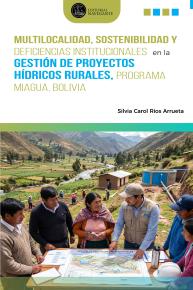
Multilocality, sustainability and institutional deficiencies in the management of rural water projects, MIAGUA Program, Bolivia
Keywords:
multi-locality, sustainability, rural water projectsSynopsis
This research paper offers a critical analysis of the application of the Logical Framework methodology to the social component of drinking water and sanitation projects in rural Bolivia. The author examines how the bureaucratic rigidity of the National Productive and Social Investment Fund (FPS) and the omission of complex sociodemographic phenomena, such as multilocality—the belonging of inhabitants to multiple territorial spaces—generate a dissonance between technical objectives and the real needs of the communities. Through a qualitative approach and the study of specific cases such as Villa Esperanza and Guaraya, the text reveals an undervaluation of the social component compared to physical infrastructure, denouncing a reactive, "firefighting" management style and proposing a methodological re-engineering toward preventive, sustainable, and accountable water governance.
Downloads
Download data is not yet available.
Downloads
Published
June 5, 2026
Categories
Copyright (c) 2026 Submission Editorial Navegante
License

This work is licensed under a Creative Commons Attribution-NonCommercial-NoDerivatives 3.0 Unported License.


 contacto@editorialnavegante.com