

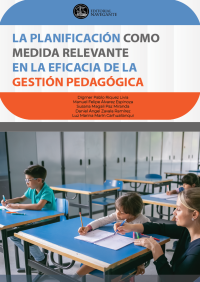
Planning As A Relevant Measure In The Effectiveness Of Pedagogical Management
Keywords:
Planning, pedagogical managementSynopsis
Since ancient times, education has been conceptualized in different ways according to the time, as it has also presented different objectives. For example, in the Greek empire, educators were dedicated to reflecting on philosophical systems, mathematics (geometry) and architecture, and education at that time was elitist: only a few could access it. Such conception of education has varied; At present, an education influenced by globalization, the knowledge society and the information society predominates (Calderón et al., 2017). Globalization, for its part, is characterized by the introduction and use of new technologies in different productive sectors; on the other hand, the information and knowledge society, as a result of globalization, are identified, in the educational field, by the use of digital devices (Pérez et al., 2018).
With all of the above, it is evident, then, the necessary changes that the traditional school has to go through, in order to adapt to new technologies, as well as to the new expectations, demands and needs of society. There is no doubt, however, that this transformation of the traditional school has only been fully realized with the COVID-19 pandemic, which has forced education, in all regions of the world, to take an entirely virtual form ( ECLAC-UN, 2020).
The present text, however, does not aim to deal with the difficulties caused by the pandemic or the necessary changes that education has undergone in this context. On the contrary, it focuses on analyzing how planning and management in education can help meet the need for constant transformation of education posed by an ever-changing reality. The ideas presented in this regard, however, can be useful when it comes to reorganizing our educational practices in situations such as the current one; although, they also bear fruit when it comes to improving the quality of educational practice in non-extraordinary contexts.
There is no doubt that planning —understood, in general terms, as the provision of a whole set of resources (economic, technological, human, etc.) in order to meet certain objectives— and pedagogical management —understood as the anticipation of the actions that will be necessary to carry out to fulfill the goals of the educational institution—they are elements without which you cannot have a true quality education. The correlation between these two elements, however, must be clarified, and we will dedicate ourselves to this in the following pages.
To accomplish this goal, the book is divided into five chapters:
Chapter I deals with the general panorama of education and the school: its diversity of definitions, the characteristics of school education and, finally, the current challenges in education.
In chapter II, planning is addressed: its definitions, educational planning, some models of its process and the dimensions in which it is divided (educational administration, pedagogical methodology, social intervention and curricular dimension).
In chapter III, the nature of pedagogical management is described: definitions of the term are exposed, as well as management as such; subsequently, it describes what each of its dimensions consists of (management management, organizational management, academic management and resource management) and, finally, its importance in the educational process is explained through research.
Chapter IV is of a practical nature, showing the methodology, analysis and discussion of the results of a study carried out in a school educational institution, in order to verify the correlation established between planning and pedagogical management.
Finally, in chapter V, the final reflections of the book are exposed, a general balance is made and a tour of the whole book
Downloads
Download data is not yet available.
Downloads
Published
April 5, 2024
Copyright (c) 2024 Submission Editorial Navegante
License

This work is licensed under a Creative Commons Attribution-NonCommercial-NoDerivatives 4.0 International License.


 contacto@editorialnavegante.com